
Whatever technique you use
Practice coaching for spinal-correction doctors
You can correct a spine. But when patients quit the plan the week the pain fades, and your team needs you for every answer, the practice wears you down. Dr. Fred DiDomenico teaches you and your team the practice side, so patients finish care, bring their families, and the schedule holds without you carrying it.
The gap nobody coaches
You mastered correction. Now build the practice that lets patients finish it.
Any corrective technique
Your seminars teach the correction. This is the practice around it.
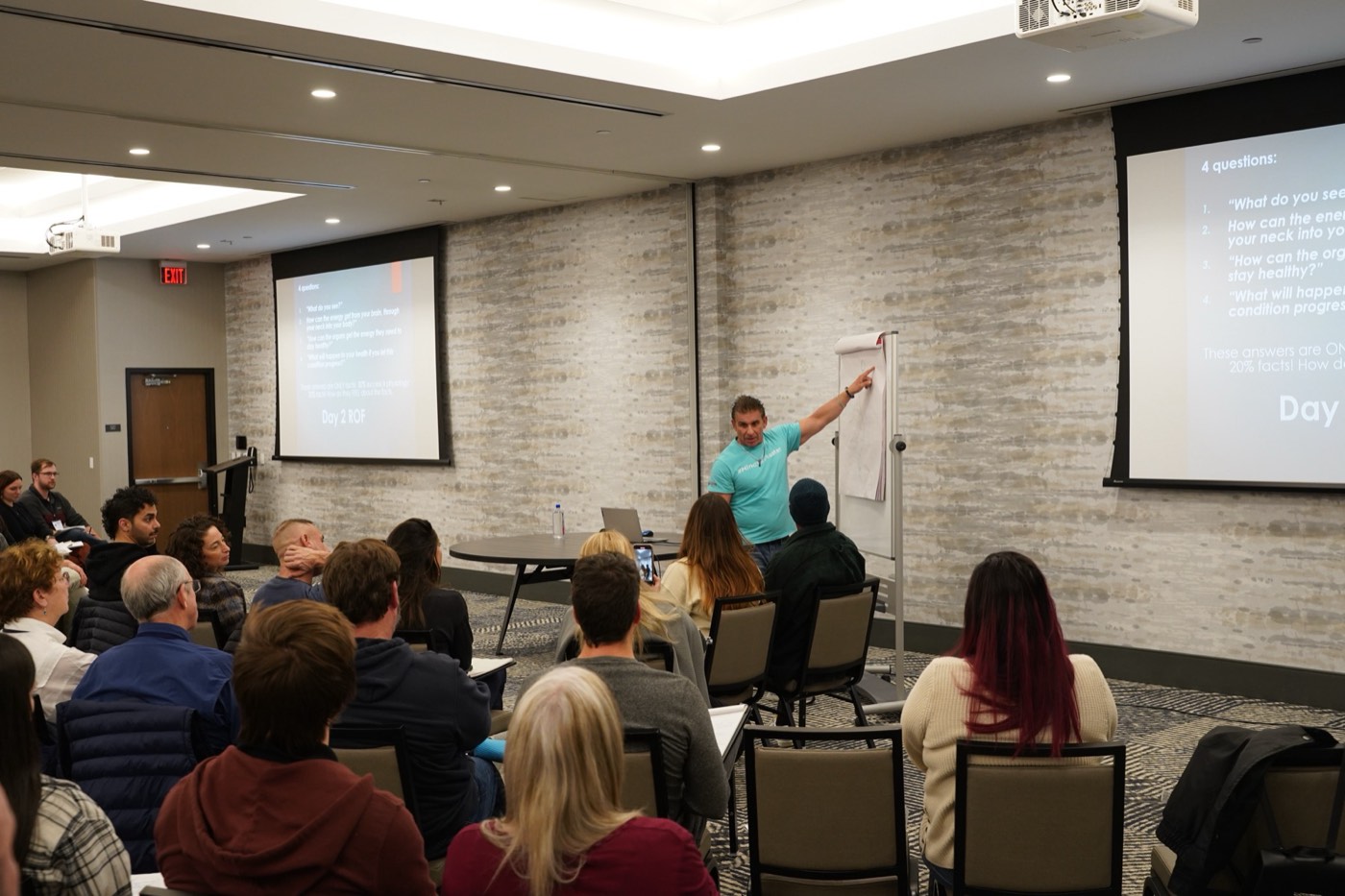
It hurts to watch a patient walk away halfway through correction, knowing how much better they could be. Long corrective plans only work when patients commit and finish, and technique seminars do not teach that part. Whatever technique you use, CBP or another, Dr. Fred teaches you and your team the practice side: the conversations, the schedule, and the follow-through. He has spent many years around the CBP community. This is business, team, and retention coaching. It sits alongside your technique training, never in place of it.
Corrective care conversations
Three conversations decide a corrective practice
The report of findings
It starts on Day 1 with the Patient Application Process. Patients apply for care, so the sales pitch they expect is gone. Then the spouse joins for Day 2, and you ask more than you tell.
"We don’t accept every patient that walks in here."
The financial
A long corrective plan feels expensive to someone who has not said what they want. Qualify desire before you show a number, then present prepay as a reward for deciding now.
"You told me your health is your top priority. Here is the plan that matches that, and the easiest way to take care of it."
The re-exam
This is where most corrective plans quietly end. Call it a checkpoint, not the finish line, and book the next one before the patient walks out.
"This is a checkpoint, not the finish line. Let's look at how far you have come and put the next one on the calendar."
Retention through the full plan
Keep patients on the whole path
Every phase has a place where patients drift. Your systems should catch them there, not after they are gone.
The first visits
The plan is explained as a path, the patient and spouse attend the new patient workshop, and the next step is clear.
The first re-exam
A checkpoint with a booked next step, never an open-ended "see you when you need us."
The end of correction
The next phase is taught well before this one ends, so finishing correction is not the finish line.
The family
Spouses, kids, and parents come in. One committed patient becomes a family in care.
Team systems
A team that explains care the way you do
Picture a Tuesday where the front desk answers the money question, books the re-exam, and calls the patient who missed, and none of it waits on you.
- Short huddles before and after every shift, with the day's goals on paper.
- Written scripts for the front desk: money questions, missed visits, and patients who want to stop.
- The key numbers logged every day and reviewed every week, so problems show up early.
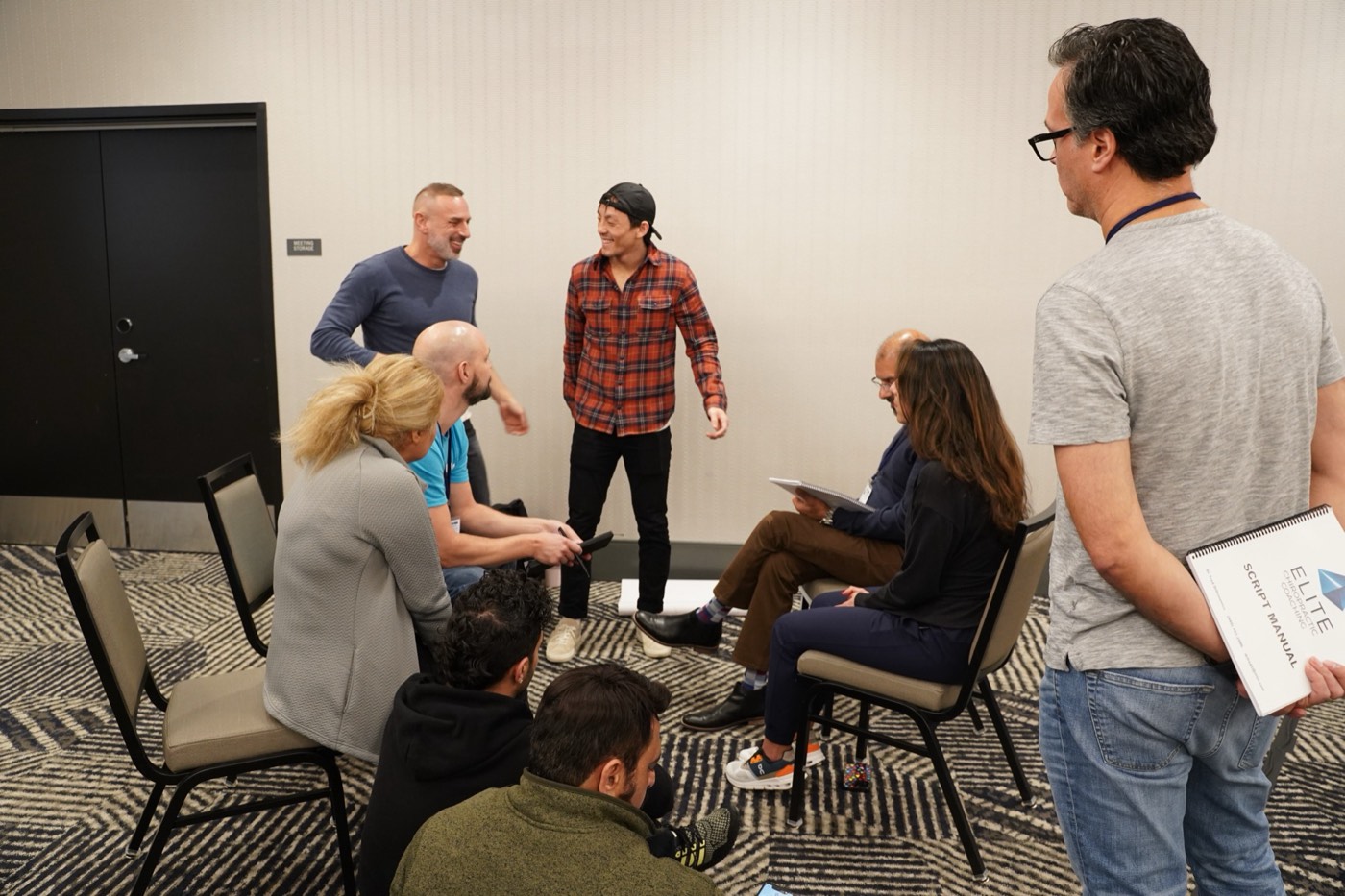
- The Elite Script Book, Team Manual, and Metrics Tracker, the same tools Dr. Fred's coached practices use.
Questions corrective doctors ask
Straight answers
Do you coach CBP chiropractors?
Yes. Dr. Fred DiDomenico has spent many years around the CBP community and coaches CBP practices on the business side: how corrective care is explained, how patients commit to a full plan, and how the team keeps them through it. He also coaches spinal-correction practices of any technique.
Is this coaching only for CBP practices?
No. Whatever technique you use, CBP or any other spinal-correction technique, Dr. Fred teaches you and your team how to run the practice side: how care is explained, how patients commit to the full plan, and how your team keeps them through it. It sits alongside your technique training. Purpose-led doctors moving toward corrective care are welcome too.
Does Dr. Fred teach adjusting technique?
No. Technique belongs to your technique training. This is business, team, and retention coaching that sits alongside it, not in place of it.
How do I get patients to commit to a full corrective care plan?
Build the patient's own goals before you show a number, get the spouse or decision maker in the room for the report of findings, and explain the whole path so the plan makes sense before money comes up. Then make sure your team explains it the same way you do.
How do I keep patients through the full plan of care?
Treat every re-exam as a checkpoint instead of an endpoint, book the next one before the patient leaves, teach the next phase before the current one ends, and give your team scripts for missed visits and for patients who want to stop. The Patient Retention Bootcamp is built around this.
What does structural correction practice coaching cost?
Coaching is by application and priced to the practice. The price depends on the size of your practice, your team, and how hands-on you want Dr. Fred to be. The first step is a free 15-minute call.
Start with 15 minutes
See if coaching fits your practice
Fifteen minutes. No pitch. Dr. Fred tells you straight whether 1:1 coaching, a bootcamp, or neither is the right move.